🇳🇬 Nigeria Power · Issue 02 · 23 March 2026

The economics, execution, and open questions driving Nigeria's energy transition

2060 target feasibility. The companies reshaping the sector. Grid and tariff economics. And how the Hormuz crisis is amplifying every structural tension.

Grid Output

4,200 MW

vs 30,000 MW needed

Petrol (Gantry)

₦1,245/L

4th hike, +61% since Feb

Oil Windfall

₦30.2T

NESG projected

Solar Added (2025)

803 MW

Almost entirely off-grid

🇳🇬 Nigeria Power

Solar panel installation on rooftop in Nigeria

Photo: Unsplash (Rooftop Solar)

803 MW of Solar in One Year, ₦30 Trillion on the Table, and a 2060 Target That Needs Answering

Nigeria added more distributed solar in 2025 than in the previous five years combined. A historic oil windfall is arriving. The question is whether any of it funds the transition the country has committed to.

Nigeria's energy transition story in March 2026 is defined by a structural contradiction that predates the Hormuz crisis but has been sharpened by it. The country deployed 803 MW of distributed solar in 2025, almost entirely off-grid, driven not by federal strategy but by the economics of diesel displacement. Lagos installers report surging demand. Carbon-financed cookstoves are reaching 2.2 million people. BURN's Kano factory produces 100,000 stoves per month. The market is moving.

Simultaneously, NESG projects a ₦30.2 trillion oil windfall from elevated crude prices. For the first time during an oil revenue surge, Nigeria has instruments designed to channel surplus into transition: a $1 billion green bond with IFC support, REA's ₦100 billion mini-grid facility, active DARES disbursement, and an operational carbon registry. Whether those instruments are used, or whether the windfall is consumed by recurrent expenditure as in every previous cycle, is the central question this section tracks.

Nigeria: 2060 Target Check

Feasibility Solar panels representing Nigeria's renewable energy deployment target

Photo: Unsplash

Is Nigeria's Net-Zero 2060 Target Structurally Feasible?

The Energy Transition Plan prices universal energy access at $25.8 billion and the full path to net zero by 2060 at $410 billion. Current progress against that target: grid generation averaged 4,200 MW in February 2026, roughly a factor of 7 below the 30,000 MW required for industrialisation. Renewables represent approximately 14% of installed capacity, against an ETP trajectory requiring 80% by mid-century.

The positive signals are real. The 803 MW solar addition in 2025 shows the market responds when economics align. The 2026 Tax Act preserves VAT and import duty exemptions on solar equipment and introduces a 5% capital tax credit for energy transition investments. Carbon market infrastructure is operational: BURN's Article 6 authorization for 5.2 million credits to CORSIA demonstrates Nigeria can execute international carbon transactions.

The structural gaps are equally real. Transmission infrastructure remains the binding constraint. Off-grid solar scales around the grid, not through it. Sixteen states hold electricity transfer orders under the Electricity Act, creating parallel regulatory environments. DARES took two years from approval to first disbursement. At current deployment rates, the 2060 target requires a sustained 8x acceleration in annual renewable additions, plus grid investment at a scale Nigeria has never achieved.

Assessment: The 2060 target is technically achievable but institutionally constrained. Technology cost is no longer the barrier. Execution speed, regulatory coordination, and fiscal allocation are.

Nigeria Energy Transition Plan →
NIGERIA 2060 NET-ZERO: CURRENT vs REQUIRED TRAJECTORY Annual renewable MW additions · Sources: Nigeria ETP, REA, IEA Current Grid 4,200 MW generation (Feb 2026 avg) Required 30,000 MW needed for industrialisation ANNUAL RENEWABLE ADDITIONS 2025 (actual) 803 MW (distributed solar, almost entirely off-grid) Required (annual) ~6,400 MW per year to meet 2060 ETP target THE GAP: Current rate requires 8x acceleration 803 MW/yr → ~6,400 MW/yr sustained for 34 years Instruments that exist for the first time during an oil windfall: $1B Green Bond · DARES $750M · REA ₦100B · Carbon Registry · 5% Capital Tax Credit · ₦30.2T windfall Sources: Nigeria ETP ($410B total, $25.8B universal access), REA, World Bank, NESG · The Climate Ledger

Nigeria: Who Is Executing

Companies Industrial manufacturing facility and energy infrastructure

Photo: Unsplash

BURN, Dangote, SAGLEV, and the Companies Reshaping Nigeria's Energy Landscape

BURN Manufacturing: Secured Nigeria's first Article 6 authorization to transfer 5.2 million carbon credits to CORSIA. Operating a manufacturing facility in Kano producing 100,000 clean cookstoves per month. Over 650,000 stoves distributed, reaching 2.2 million people, with carbon finance subsidising retail prices from ₦58,000 to ₦5,000 to ₦15,000. This is the most advanced carbon-to-deployment pipeline operating in Nigeria.

Dangote Refinery: Operating at 650,000 bpd nameplate capacity, refining Nigerian crude domestically. Three gantry price increases in March pushed petrol to ₦1,245 at the gantry. The refinery has ended Nigeria's dependence on imported refined products but has not broken the link between global crude prices and domestic pump prices. The pricing mechanism, not the facility, is the constraint.

SAGLEV Motors: Assembling Dongfeng electric vans in Nigeria, positioning for commercial fleet electrification. Kenya's Rideence has begun local EV assembly. Spiro operates 60,000 electric bikes across West Africa. Morocco is building a $5.6 billion gigafactory. The African EV manufacturing base is forming, and Nigeria is in the early cohort.

Distributed Solar Installers (Lagos, Abuja, Port Harcourt): Unnamed but collectively responsible for the 803 MW deployed in 2025. Operating in an unregulated market with no national certification framework, significant safety gaps, but clear demand signals from C&I customers paying 30 to 40% of production costs on energy.

Carbon Herald →

Nigeria: Grid & Tariff Economics

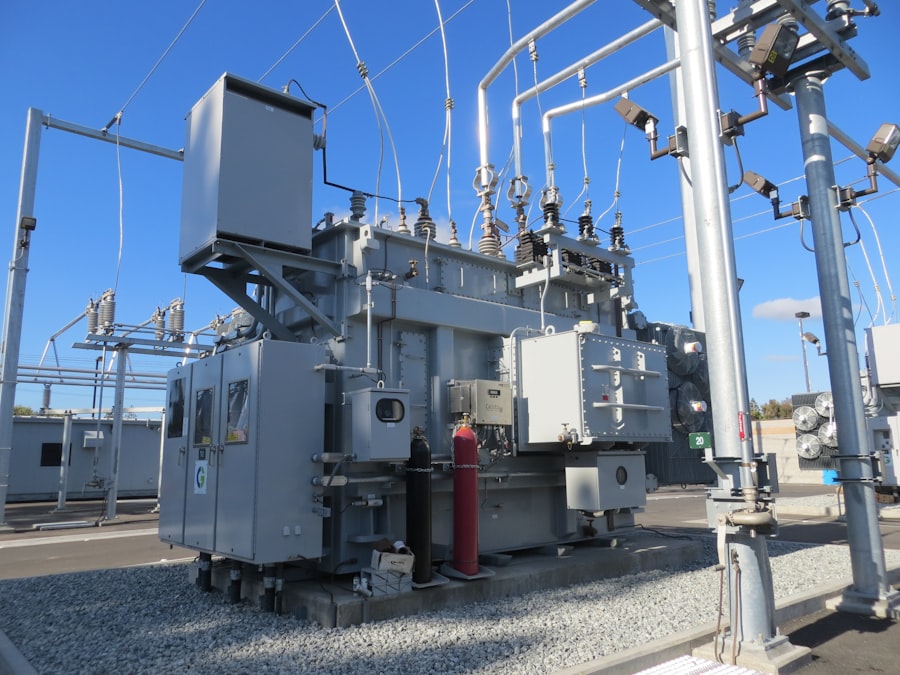
Infrastructure Electrical power grid and transmission infrastructure

Photo: Unsplash

₦20 Billion in Meter Refunds, Togo Wanting More Power, and a Grid Running at 14% of What the Country Needs

Grid performance: Average generation reached 4,200 MW in February, a 5% improvement but still a fraction of the 30,000 MW the country needs for industrial-scale growth. Peak demand is estimated at 28,000 MW. The gap is filled by an estimated 40,000 MW of private diesel and petrol generators, the largest distributed fossil generation fleet in Africa.

DisCo liquidity: NERC ordered distribution companies to refund ₦20.33 billion in estimated billing charges to metered customers, intensifying the financial pressure on companies that already struggle to finance basic maintenance. Collection efficiency across DisCos averages roughly 60%. Aggregate technical, commercial, and collection losses exceed 40%.

Export demand: Togo has formally requested increased electricity imports from Nigeria. The grid that cannot reliably serve domestic demand is being asked to export, a signal of regional confidence in Nigeria's generation potential but a reminder of the transmission constraint that prevents that potential from reaching either domestic or cross-border markets.

Tariff reform: Service-reflective tariffs for Band A customers are progressing under NERC. The political fragility of cost-reflective pricing remains the key risk. Simultaneously, the REA ₦100 billion mini-grid facility represents the first naira-denominated renewable energy financing at scale, creating a parallel track: grid tariff reform for connected customers, mini-grid financing for the 85 million without access.

Bottom line: The economics of Nigerian power are split. On-grid economics remain structurally challenged by DisCo insolvency, transmission bottlenecks, and political resistance to cost-reflective pricing. Off-grid economics are increasingly favourable, with solar-plus-storage displacing diesel at 3x to 5x cost advantage. The market is building around the grid because the grid cannot absorb the demand.

Nairametrics →

Nigeria: Disruption Impact

Oil & Fuel Fuel station and petroleum pricing in Nigeria

Photo: Unsplash

How the Hormuz Crisis Hits: ₦1,245 Gantry, Up to ₦1,400 at Pump, ₦30 Trillion Windfall, and the Pricing Paradox

The Hormuz disruption has amplified the structural tension in Nigeria's energy economy. Petrol climbed from ₦774 to ₦1,245 at the gantry in three weeks, a 61% increase at the gantry, despite Nigeria shipping zero barrels through the strait. The pass-through mechanism is global benchmark pricing: Dangote refines Nigerian crude but prices off Brent. According to GlobalPetrolPrices, Nigeria recorded the highest petrol price increase in the world at 39.5% between 23 February and 16 March. The NLC has formally requested government intervention. CPPE warns SMEs face existential pressure from energy costs. Cooking gas is approaching ₦20,000 per 12.5kg cylinder, pushing households back to firewood and charcoal.

On the revenue side, NESG projects ₦30.2 trillion in additional oil income. NNPC is launching Cawthorne, its third new crude grade in three years, pushing output toward 1.7 mb/d (NNPC target) (NNPC target; OPEC reported 1.31 mb/d for February). Foreign Minister Tuggar is pitching Nigeria as an alternative supply route for Gulf producers. Nigeria spent ₦84.69 billion on petrol imports from Togo in Q4 2025, but the FG has now suspended import licences as local refining capacity rises.

Bottom line: The same barrel of crude generates a ₦30 trillion treasury windfall and ₦1,245 gantry prices (up to ₦1,400 at pump) simultaneously. This is not a crisis-specific problem. It is the permanent condition of an economy that exports crude, imports pricing, and has not yet built the downstream infrastructure to decouple domestic energy costs from global commodity volatility. The Hormuz crisis makes the condition visible. It does not create it.

Nairametrics →
DANGOTE GANTRY PRICE · FOUR HIKES IN THREE WEEKS ₦ per litre · Source: PM News, Channels TV, Nairametrics · 1 Mar to 21 Mar 2026 ₦1,400 ₦1,100 ₦900 ₦700 ₦774 Pre-crisis ₦875 Hike 1 ₦995 Hike 2 ₦1,175 Hike 3 ₦1,245 Hike 4 21 Mar Pump range ₦1,130-1,400 +61% at gantry in 21 days · Nigeria recorded world's highest petrol price increase at 39.5% (GlobalPetrolPrices) Sources: Dangote Refinery, PM News, Channels TV, GlobalPetrolPrices · The Climate Ledger

Why It Matters

Lagos skyline and Nigeria's urban energy demand

Photo: Unsplash

Synthesis

Nigeria's energy transition is advancing on economics, not on strategy. The 803 MW of distributed solar deployed in 2025, the carbon credits funding cookstoves at scale, the surging demand from C&I customers paying unsustainable energy costs: these are market signals, not policy outcomes. The instruments to channel the current oil windfall into transition infrastructure exist for the first time: green bond, REA financing, DARES, carbon registry, tax incentives. Previous windfalls in 2008 and 2011 to 2014 left no energy infrastructure behind.

The 2060 net-zero target requires an 8x acceleration in annual renewable deployment, grid investment Nigeria has never achieved, and regulatory coordination across 16 state-level electricity regimes. The companies executing, from BURN's carbon-financed cookstoves to SAGLEV's EV assembly to the unnamed Lagos solar installers, are doing so despite institutional constraints, not because of institutional support. The question for the next 12 months is not whether the transition continues. It is whether the fiscal windfall, the policy instruments, and the market momentum align, or whether Nigeria repeats the pattern of every previous commodity boom: revenue consumed, infrastructure deferred, and the 85 million without electricity still waiting.

← Back to Current Issue