Three weeks into the Hormuz crisis, the disruption is deepening rather than resolving. Iraq declared force majeure on all foreign-operated oilfields on 21 March. Drones struck two Kuwait refineries on 20 March. Brent crude closed at $112.19 on Friday, its fifth consecutive weekly gain. According to the IEA's March Oil Market Report, global supply plunged 8 million barrels per day in March, with Gulf producers cutting output by at least 10 mb/d. The IEA released 400 million barrels from emergency reserves across 30 nations, the largest coordinated draw in the agency's 50-year history. It covers approximately four days of global consumption.
For African economies, the effects are asymmetric. Nigeria, producing 1.31 mb/d according to OPEC (NNPC targets 1.7 mb/d including new crude grades), faces a projected ₦30.2 trillion windfall (NESG). Yet Dangote raised its gantry price to ₦1,245 for the fourth time in three weeks, with pump prices reaching ₦1,331 to ₦1,430 in Abuja. According to GlobalPetrolPrices data, Nigeria recorded the highest petrol price increase in the world at 39.5% between 23 February and 16 March. Oil-importing economies across East Africa face direct inflationary pressure with limited fiscal buffers. Egypt raised gas prices 30%, diesel 17%.
Beneath the crisis, the structural story continues. Global energy transition investment reached $2.3 trillion in 2025 (BNEF), with the IEA tracking $2.2 trillion in clean technologies. Battery storage costs fell 45% in a single year to $70/kWh. Peak Energy deployed the first commercial sodium-ion battery on the US grid. Nigeria added 803 MW of distributed solar in 2025. Lagos solar installers report surging demand as factory owners switch from diesel at ₦70 million per month. The economics are accelerating the transition from the bottom up, but grid infrastructure, regulatory fragmentation, and capital access remain binding constraints.
▶ What to watch: Hormuz transit resumption timeline (insurance markets are the leading indicator). IEA reserve depletion rate versus blocked supply. Whether Nigeria's ₦30.2 trillion windfall reaches transition instruments or recurrent expenditure. Citi forecasts Brent at $120 near-term, $150 bull case. Saudi officials warn $180 if disruptions extend through late April.
Fifth consecutive weekly gain · 21 confirmed attacks on merchant ships · IEA's largest emergency release in 50 years covers 4 days of global demand · Saudi officials warn $180 if disruptions extend through April
Brent crude closed at $112.19 on Friday 21 March, its fifth consecutive weekly gain, after Iraq declared force majeure on all foreign-operated oilfields and drones struck two refineries in Kuwait. The crisis has now removed approximately 20% of global seaborne oil supply for three weeks. According to IEA data, global supply plunged 8 million barrels per day in March, with Gulf producers cutting output by at least 10 mb/d as storage fills and export routes remain closed. Iran has conducted 21 confirmed attacks on merchant vessels. Over 150 tankers remain stranded outside the strait.
The IEA coordinated a 400 million barrel emergency release across 30 nations on 11 March, the largest in the agency's 50-year history. The US contribution of 172 million barrels implies 1.4 mb/d over 120 days, covering approximately 15% of lost supply. Citi raised its near-term forecast to $120, with a $150 bull case. Saudi officials told the Wall Street Journal that prices could reach $180 if disruptions last through late April. For African economies, the implications are asymmetric: oil exporters face windfall revenue while importers absorb direct inflationary pressure through fuel and transport costs with limited fiscal buffers.
Bottom line: This is no longer a risk premium event. Physical barrels are being affected across crude, products, LPG, and LNG simultaneously. The IEA's emergency reserves cover 4 days of global consumption and 20 days of normal Hormuz flow. The bypass infrastructure covers roughly a third. The gap between what has been lost and what can be replaced is widening, not narrowing.
$3.3 trillion total energy investment in 2025 · Clean energy outspending fossil fuels for the first time · 320 new energy startups raised first funding
The capital tilt toward clean energy is no longer gradual. Global energy investment passed $3.3 trillion in 2025, with $2.2 trillion flowing into clean energy technologies: renewables, EVs, grids, storage, efficiency, and clean fuels (IEA). Two out of every three dollars spent on energy worldwide now goes to cleaner options, even as climate rhetoric takes a back seat to security and affordability in political discourse. The IEA's State of Energy Innovation 2026 report finds over 320 new energy startups raised first-round funding in 2025, and energy's share of all global patents is growing. Venture capital, corporate R&D, and public spending are converging around competitiveness and security rather than climate alone. For context: more than 90% of new renewable energy projects are now cheaper than fossil fuel alternatives. Average battery grid storage costs are more than three times lower than three years ago. The investment case no longer depends on subsidy. It is driven by economics.
US DOE rolls out $1.9B for grid upgrades · 18 GW of storage under construction in the US alone · IEA: grids and flexibility now the critical investment gap
Generation capacity is scaling. Capital is available. But the grid cannot absorb it. The IEA warns that global grid investment must double by 2030 to meet climate targets, and the US Department of Energy responded in March with a $1.9 billion funding opportunity for "urgently needed" grid upgrades. In the United States, 18 GW of battery storage is under construction and expected to complete by the end of 2026 (Deloitte). Renewables make up the vast majority of new generation coming online every month. But interconnection queues are years long, with some utilities seeing their large-load queues shrink by 50% or more after introducing stricter rules. The constraint is no longer the cost of panels or turbines. It is the cost of connecting them. For Africa, where grid investment actually fell 15% in 2025 (IEA), this global bottleneck is magnified: the continent imported 18.2 GW of solar modules but utility-scale additions were a fraction of that. The gap between what arrives at the port and what reaches the grid defines the next decade.
Largest coordinated electrification push in history · ATAF fund reaches $50M first close · SEFA targets $2.5B with $10B commercial capital
The institutional pipeline for African clean energy is expanding at every level. The European Investment Bank committed over €1 billion for renewable energy projects across sub-Saharan Africa in March, supporting Mission 300, the World Bank and AfDB initiative to connect 300 million people to electricity by 2030. EIB Group President Nadia Calviño framed the commitment as "smart economics" for a continent where 600 million people still lack access. In parallel, the African Transition Acceleration Fund (ATAF) reached its $50 million first close, anchored by FSD Africa Investments and Allied Climate Partners, with IFC, KfW, and Proparco as co-investors. The fund, managed by AIIM, targets $200 million for early-stage clean energy developers across three themes: clean electrons, sustainable transport, and clean molecules. SEFA contributions rose to $88 million in 2025 (up from $54.3 million in 2024), and the fund is now targeting $2.5 billion in its pipeline and $10 billion in commercial capital mobilisation by 2030. The instruments exist. The capital is being committed. The question remains whether it reaches the ground.
Execution gap is the central challenge · $270B annual finance shortfall · Private capital at 18% of flows, lowest globally · InfraCredit Nigeria: zero defaults across 24 transactions
Capital is not the problem. Execution is. Africa's power sector attracted an estimated $13.84 billion in 2025, the vast majority in clean power (Energy Capital & Power). But of 74,000 MW of announced capacity, only about 14,500 MW has been realised, a conversion rate below 20%. The central challenge is no longer capital scarcity but bankable project pipelines: Africa receives just $30 billion of the $300 billion in annual climate finance it needs, and private capital accounts for only 18% of total flows, the lowest share of any region globally. The continent's annual finance shortfall stands at $270 billion (AfDB). Where execution works, the model is clear: a 300 MW solar-plus-BESS project in South Africa reached FID with 25-year PPAs from Sasol and Air Liquide. Zambia's 32 MW Ilute Solar Project achieved financial close through market-based power sales into the Southern African Power Pool. In Nigeria, InfraCredit has achieved zero defaults across 24 completed transactions through local-currency guarantees and pension fund mobilisation. The question for 2026 is whether these models can scale before the next round of commitments meets the same execution wall.
The 11th Powering Africa Summit (Washington DC, 19-20 March) produced two project announcements with continental significance. Sun Africa signed a Memorandum of Understanding with Liberia for up to 500 MWp of utility-scale solar paired with 200 MWh of storage. If executed, this would represent the largest single renewable commitment in Liberian history. Separately, HYDRO-LINK announced the appointment of a CEO for its 720-mile, 400kV cross-border transmission line from Angola to the DRC, designed to deliver 1,200 MW of renewable hydropower. The project, if completed, would be the world's longest cross-border renewable energy transmission corridor.
US Secretary of Energy Chris Wright delivered a keynote focused on US-Africa energy partnership. Lagos State presented its electricity market reform, including LASERC's regulatory framework for private capital participation. The summit's shift from policy aspiration to execution (bankable projects, transmission infrastructure, regulatory reform) signals a maturing of the US-Africa energy corridor, though MoUs remain the dominant currency and financial close remains the binding test.
Bottom line: Global energy transition investment hit $2.3 trillion in 2025 (BNEF), but Africa received less than 3%. The Powering Africa Summit produced MoUs (Sun Africa 500 MW in Liberia, HYDRO-LINK 1,200 MW Angola-to-DRC) but MoUs are not financial close. The Hormuz crisis is already rotating short-term capital back into oil and gas. SEFA is targeting $2.5 billion by 2028. The gap between announced capital and deployed capital remains the defining constraint.
Mass-production-ready efficiencies achieved · First commercial modules expected this year · Could push solar beyond 30% conversion
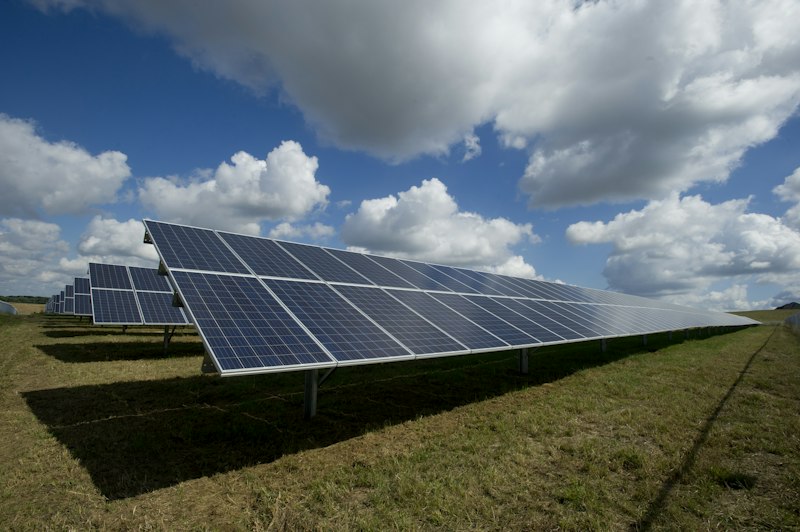
The solar industry's next inflection point is arriving. Hybrid perovskite-silicon tandem solar cells have achieved mass-production-ready efficiencies, and the first commercial versions are expected to reach the market in 2026. These cells layer a perovskite film on top of conventional silicon, capturing a broader spectrum of sunlight and pushing conversion efficiencies beyond the 30% barrier that has constrained single-junction silicon for decades. US manufacturer First Solar is adding perovskite to its cadmium telluride thin-film production line, aiming to turbocharge its solar conversion efficiency. Meanwhile, metal-air batteries and iron-air systems capable of 100-hour storage durations are entering pilot deployment, addressing the intermittency challenge that has limited solar and wind penetration. For Africa, where Chinese module prices have already fallen to $0.08 per watt, the arrival of higher-efficiency perovskite tandem modules means more power per panel, reducing both rooftop space requirements for commercial installations and balance-of-system costs that dominate project economics on the continent.
76% of US power executives increasing AI spending · VPPs solving data centre demand surge · DeepSeek R1 challenges power growth assumptions
Artificial intelligence is no longer a research curiosity in energy. It is becoming operational infrastructure. Deloitte reports that 76% of US power and renewable energy executives plan to increase AI spending in 2026, deploying intelligent systems for demand forecasting, fault detection, and real-time grid optimisation. Virtual power plants, which aggregate distributed energy resources like rooftop solar, batteries, and smart appliances into grid-dispatchable assets, are scaling rapidly: distributed storage has grown fivefold since 2020 to 4.8 GW in 2024, with another 4 GW expected by 2026. RMI identifies VPPs as a critical solution to the data centre electricity surge, offering grid capacity at roughly half the cost and five to ten times the speed of supply-side alternatives. Meanwhile, DeepSeek R1's efficiency breakthrough showed that algorithmic innovation could drastically reduce energy consumption per AI task, potentially resetting data centre power demand forecasts. For African grid operators managing 4,000 MW systems with 30,000 MW demand, AI-driven load management and predictive maintenance could close reliability gaps faster than physical infrastructure alone.
US demand rising to 134 GW by 2030 · Renewables supply 27% of data centre power, projected to meet half of demand growth · Tech giants account for 43% of all clean energy PPAs
Data centres are becoming the single largest new driver of electricity demand globally, and the race to power them is reshaping clean energy markets. US data centre demand is projected to reach 75.8 GW in 2026 and 134 GW by 2030 (S&P Global), potentially consuming up to 17% of all US electricity (EPRI). Renewables currently supply 27% of data centre electricity worldwide, and total renewable generation for data centres is projected to grow 22% annually through 2030, meeting nearly half of anticipated demand growth. Tech giants already account for 43% of all corporate clean energy purchase agreements globally (BloombergNEF). Operators are co-locating data centres with large renewable plants and pairing solar with battery storage to reduce grid dependence. Some US hyperscalers are turning to nuclear as a firm power source. For Africa, where Lagos and Nairobi are emerging data centre hubs, this trend presents both opportunity and risk: corporate PPAs could finance new renewable capacity at scale, but if data centres secure the most reliable power while surrounding communities face outages, the grid serves capital before it serves citizens. Nigeria's November 2026 deep-dive will explore this question directly.
4,800 metre wells at 271°C · First plant online in 2026 · 500,000 acres of geothermal rights secured
Next-generation geothermal is moving from demonstration to commercial scale. Fervo Energy has cut drilling time and costs by nearly 80% at depths of approximately 4,800 metres and temperatures of 271°C, using techniques adapted from the oil and gas industry's horizontal drilling expertise. The company signed a 15-year, 320 MW power purchase agreement with a major utility, with its first plant expected online in 2026, designed to power roughly 375,000 homes with room for tenfold expansion. A $462 million funding round in 2025 advanced its flagship Cape Station toward full commercial deployment. Unlike solar and wind, geothermal provides firm, dispatchable baseload power around the clock. Fervo's modular, repeatable well designs support rapid scaling from single wells to multi-hundred-megawatt facilities. For East Africa, where Kenya already generates 47% of its electricity from geothermal, this cost breakthrough could unlock resources across the Rift Valley from Ethiopia to Mozambique that were previously uneconomic at conventional drilling costs.
Dynamic line rating boosting capacity 10 to 50% in Malaysia · Pay-as-you-go reaching 500,000 people in Sierra Leone · Regional power pools connecting 15 West African countries
IRENA's latest Innovation Landscape report identifies 40 innovations that could transform energy systems globally, and a striking number are already being tested in African markets. Battery swapping stations in Uganda and Rwanda are making electric mobility accessible in markets where fixed charging infrastructure is impractical. Regional power pools in West Africa enable 15 countries to share renewable resources across borders, smoothing intermittency at continental scale. In Tanzania and Kenya, energy communities collectively own and benefit from local renewable projects, a model that aligns energy access with economic participation. Dynamic line rating, which uses real-time weather monitoring to increase existing transmission capacity by 10 to 50% without building new lines, is operational in Malaysia and directly applicable to Africa's congested grids. Pay-as-you-go business models have brought affordable electricity to over 500,000 people in Sierra Leone and Liberia. The report's central finding: transformation happens when technological innovation is combined with innovation in policy, regulation, market design, and business models. No single technology solves the access gap. Systems thinking does.
Bottom line: The technology pipeline is advancing rapidly, from perovskite solar to AI-optimised grids to geothermal cost breakthroughs. The constraint is no longer hardware cost. It is grid infrastructure, permitting speed, and the ability to absorb innovation at scale in markets where institutional capacity is thin.
April 2026 cap saves households ~£117/year · £5.5B in consumer energy debt · Government scrapping ECO levy from bills · Transmission network investment driving standing charges up 65%
Ofgem announced the Q2 2026 energy price cap at £1,641 for a typical dual-fuel household, a 6.6% decrease from the previous quarter. But four years after the energy crisis began, UK bills remain approximately 40% above pre-crisis levels. The structural story is more significant than the headline number. From April 2026, the UK Government is removing green levies from energy bills and funding them through general taxation, a policy shift projected to save households up to £150 annually. The Energy Company Obligation (ECO) levy is being scrapped from bills entirely. Meanwhile, electricity standing charges are rising, driven by a 65% increase in the transmission network investment allowance as the National Energy System Operator accelerates grid buildout for the clean power transition. Consumer energy debt has reached a record £5.5 billion across retail suppliers. For policymakers globally, the UK example illustrates a dilemma: the transition requires massive grid investment that must be funded, but loading those costs onto consumer bills during a cost of living crisis is politically unsustainable. Moving costs to general taxation is one answer, but it shifts rather than eliminates the burden.
CBAM tightening on steel, aluminium, cement exports · EU scrapping Trump-era $30B clean energy cuts · Africa positioned between European rules and Chinese speed
The EU Emissions Trading System hit €210 as reform tightened supply, while African carbon credits continue trading near $3 per tonne, a 70x gap. This disparity is no longer an abstract market curiosity. As CBAM transitions from reporting to enforcement, African manufacturers exporting steel, aluminium, cement, and fertiliser to Europe will face an effective carbon tariff based on embedded emissions. Countries without domestic carbon pricing pay the full EU rate. South Africa's exporters face this reality first: as the European Council on Foreign Relations notes, CBAM is making "electricity reform, credible trading partners, and bankable decarbonisation central to future competitiveness." Europe's comparative advantage lies in regulatory assistance and early-stage support for carbon markets and green hydrogen, but its weakness is delivery speed. African governments increasingly turn to partners that mobilise faster, even when European terms are better structured. Meanwhile, Trump's administration scrapped $30 billion in Biden-era clean energy finance, shifting the global burden further toward European DFIs and blended finance instruments.
BURN authorised to sell 5.2M credits to CORSIA · Verra issues first CCP-labeled clean cooking credits · ACMI secures $1B in demand commitments · Nigeria 2026 Tax Act preserves solar VAT exemption
Nigeria's carbon market infrastructure is moving from policy to transactions. The National Council on Climate Change granted BURN a formal Letter of Authorization under Article 6 of the Paris Agreement, enabling the transfer of 5.2 million carbon credits from clean cookstove distribution to the aviation sector through CORSIA. Separately, Verra issued the first carbon credits with Core Carbon Principles (CCP) labels under its clean cookstove methodology to the UpEnergy Nigeria project, a milestone for market integrity. The Federal Government's 80-million-cookstove programme targets up to $5 billion per year in verified carbon credit revenue at full scale. Across the continent, the Africa Carbon Markets Initiative (ACMI) has secured over $1 billion in demand-side commitments for African credits by 2030, including $650 million from Standard Chartered, Vertree, and the UAE Carbon Alliance. Nigeria's 2026 Tax Act preserves VAT and import-duty exemptions for solar equipment while introducing a 5% capital tax credit for energy transition investments. Kenya has launched its carbon market activation plan, with 12 additional countries committed to developing frameworks. The regulatory architecture for African carbon is being built in real time.
South Africa opens wholesale electricity market · 16 Nigerian states hold electricity transfer orders · 24% of global emissions now under carbon pricing
The regulatory landscape across African energy markets is simultaneously advancing and fragmenting. South Africa is developing its Wholesale Electricity Market, enabling industrial consumers to move from passive buyers to active market participants through licensed electricity traders like Lyra Energy, backed by Scatec and STANLIB. This is critical because as CBAM tightens, South African mining and manufacturing exporters need audit-ready emissions claims. In Nigeria, 16 states now hold electricity transfer orders under the Electricity Act reforms, creating parallel regulatory architectures that increase complexity for investors even as they devolve authority closer to consumers. Across the continent, more than 40% of African nations still lack formal renewable energy auction programmes or tender systems, which are the mechanisms most commonly used to attract long-term investment (BloombergNEF). The Africa Sustainability Outlook 2026 from SSCG Group notes that ESG reporting and compliance standards are tightening, with large companies in energy and finance leading the shift while smaller firms struggle with costs. Roughly 24% of global emissions are now covered by some form of carbon pricing, and ACMI aims to unlock $6 billion in revenue and 30 million jobs by 2030. The gap between regulatory ambition and implementation capacity remains the binding constraint.
Bottom line: Carbon pricing infrastructure is being built across Africa's two largest economies. But with EU carbon at €210 and African credits at $3, the price architecture still fails to value emissions reduction where it occurs. Regulatory fragmentation, not policy absence, is the binding constraint.
CATL's Naxtra product line enters mass production · 175 Wh/kg, 500 km range · China controls 96% of sodium-ion capacity
MIT Technology Review named sodium-ion batteries among the top breakthrough technologies of 2026, and the industry is moving fast. CATL announced commercial-scale deployment across four sectors: battery swapping, passenger vehicles, commercial vehicles, and energy storage. Its next-generation sodium-ion cell achieves 175 Wh/kg specific energy and 500 km driving range in passenger vehicles. In China, Yadea launched four electric two-wheeler models powered by sodium-ion in 2025, while Shenzhen piloted swapping stations for sodium-ion batteries. US-based startup Unigrid became the first company outside China to export sodium-ion at scale, achieving UN 38.3 transport certification. Peak Energy is deploying grid-scale sodium-ion storage in Wisconsin. The strategic significance is clear: sodium is abundant everywhere, unlike lithium which is concentrated in a handful of countries. For Africa, where lithium supply chains add cost and geopolitical risk, sodium-ion could fundamentally reshape the economics of off-grid storage.
BNEF data confirms price collapse · Solid-state batteries closing performance gap · $5B sodium-ion market projected
BloombergNEF data shows lithium-ion battery pack prices for stationary storage fell to $70/kWh in 2025, a 45% year-on-year decrease and the steepest decline among all battery categories. Stationary storage is now the cheapest lithium-ion segment for the first time, fundamentally changing the economics of grid-scale and behind-the-meter deployment worldwide. Meanwhile, solid-state battery technology is accelerating toward commercial readiness: energy densities reaching up to 500 Wh/kg compared to 250 Wh/kg in conventional systems, with patent activity surging as companies race to secure intellectual property. The sodium-ion market is projected to reach $5 billion by 2026. China controls over 80% of solid-state capacity and 96% of sodium-ion capacity globally, but US and European manufacturers are investing heavily to localise production. For grid operators and project developers, the question is no longer whether storage is affordable but which chemistry best fits the application.
20 MW / 100 MWh operational since 2023 · Eskom creates dedicated Green division · 1,744 MW awarded across 3 BESIPPPP windows
Africa's first utility-scale battery energy storage system at Worcester in the Western Cape is proving that grid-scale storage works on the continent. Deployed by Eskom in partnership with South Korea's Hyosung Heavy Industries, the HEX facility delivers five uninterrupted hours of power from 360 lithium-ion batteries providing 20 MW / 100 MWh capacity. It has been commercially operational since October 2023, and the African Development Bank's Anthony Karembu says its success is already reshaping policy across the continent: countries are now incorporating BESS into their national master plans directly because HEX demonstrated feasibility. Eskom responded by creating Eskom Green, a new division focused exclusively on pairing renewables with battery storage. South Africa's broader BESIPPPP programme has awarded 1,744 MW across three procurement windows totalling nearly 7 GWh, including the 153 MW / 612 MWh Red Sands project, set to become Africa's largest standalone storage facility. Kenya's battery swap stations for electric motorcycles are meanwhile experiencing shortages and wait times, a signal that demand is outpacing supply across the continent's distributed storage market.
Peak Energy and RWE Americas will pilot the first passively cooled sodium-ion battery system on the Midcontinent Independent System Operator (MISO) grid in eastern Wisconsin. The system requires no active cooling, operates across a wide temperature range without performance loss, and according to Peak Energy cuts the lifetime cost of stored energy by $70 per kilowatt-hour compared to conventional lithium-ion solutions. RWE, which operates approximately 13 GW of US energy assets, will run the pilot. Separately, the US Department of Energy awarded $50 million to establish the LENS consortium at Argonne National Laboratory (March 4), a five-year effort to develop high-energy sodium-ion batteries using abundant domestic materials. For African markets, the commercial viability of passively cooled sodium-ion at grid scale has direct implications: systems that require no cooling infrastructure are better suited to high-temperature, low-maintenance deployment environments.
Bottom line: At $70/kWh, stationary storage is 3x to 5x cheaper than diesel backup across African C&I markets. Peak Energy just deployed the first commercial sodium-ion battery on the US grid: passively cooled, no maintenance, cutting lifetime costs by $70/kWh. The DOE committed $50 million to scale the chemistry. For Africa, passively cooled systems that operate in high temperatures without performance loss are the hardware the continent needs. The cost barrier has been removed. The deployment barrier has not.
2.2 million EVs sold in first two months of 2026 · Ford BEV sales down 70%, Honda down 81% · Rest of World up 84%
The global EV market is fracturing along regional lines. February 2026 saw 1.1 million units sold worldwide, but Benchmark Mineral Intelligence data reveals a tale of divergence: Europe posted 21% year-on-year growth to 600,000 units, driven by EU emissions regulations and strong demand in France (+52%) and Germany (+24%). In the EU, battery-electric cars now hold 19.3% market share, up from 14.9% a year earlier, while petrol car registrations fell 28%. The US, by contrast, collapsed 36% after the elimination of federal tax credits in September 2025, with Ford BEV sales down 70%, Honda down 81%, and SK On laying off 37% of its Georgia battery workforce. China, the world's largest market, contracted 26% in early 2026 as EVs became subject to purchase tax for the first time since 2014, though Chinese automakers shipped over 500,000 EVs overseas in the first two months, more than doubling year-on-year exports. The "Rest of World" category, which includes Africa, surged 84%: the fastest growing segment globally. South Korea's EV sales tripled month-on-month, reaching 30% market share for the first time.
17.8 million EVs sold in 2024 · 25% market share projected for 2026 · 60 million EVs now on global roads
Global EV sales reached 17.8 million units in 2024, a 25% increase that pushed EVs to nearly 20% of all new car sales worldwide. The IEA projects that share will reach 25% by the end of 2026, with total EV revenue approaching $1 trillion. Nearly 60 million electric vehicles are now on global roads. The market is expected to climb to 90 million annual sales by 2040. Over 1,000 EV models will be available to consumers by 2026, up from 785 in 2024. However, the fleet transition lags far behind sales data: EVs will only make up roughly half the global vehicle fleet by the early 2040s. The most consequential shift is in vehicle types: electric two- and three-wheelers accounted for 45% of new EV sales globally in 2025, a pattern especially visible in Africa and Southeast Asia where battery swap networks are proving more practical than fixed charging. BYD's announcement of 1,500 kW "flash charging" for passenger EVs signals that the charging speed gap with petrol refuelling is closing rapidly.
SAGLEV assembling 18-seater electric vans in Lagos · Spiro: 60,000 e-bikes, 1,500 swap stations · Ethiopia: 100,000 EVs after import ban
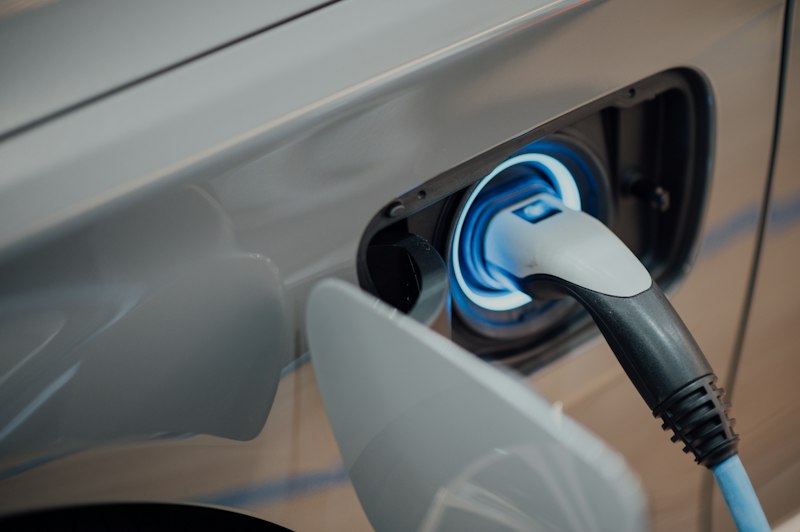
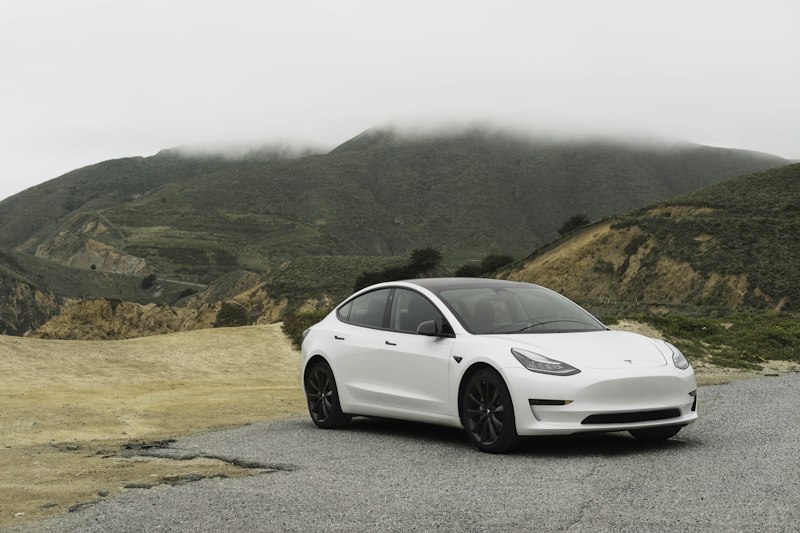
Africa's electric mobility story is accelerating from policy to production. In Nigeria, Lagos-based SAGLEV is assembling 18-seater electric passenger vans from Dongfeng Motor kits, planning 2,500 vehicles per year for West African markets. The Federal Government signed an MoU with South Korea's AEDC in January 2026 for what officials describe as Africa's first large-scale EV manufacturing plant, targeting 300,000 vehicles annually and 10,000 jobs. In Kenya, Rideence Africa signed a $2.46 million deal with Mombasa-based Associated Vehicle Assemblers for electric taxi and minibus assembly. The economics are compelling: EV charging costs approximately $3 for 200 km versus over $15 in petrol for equivalent distances. Dubai-based Spiro has deployed over 60,000 electric motorcycles across Uganda, Kenya, Nigeria, and Rwanda with 1,500 battery swap stations. Gotion High-Tech is building Africa's first battery gigafactory in Morocco, a $5.6 billion project targeting 20 GWh of annual capacity starting in 2026. Ethiopia leads the continent with roughly 100,000 EVs after banning non-electric private vehicle imports in 2024.
Bottom line: The global EV market is fracturing along policy lines. Europe grows where regulation mandates it. The US collapses where incentives are withdrawn. The Rest of World, including Africa, surges at 84% on economics alone. For African markets, the signal is clear: EV adoption is being driven by cost, not policy. Two-wheelers at $3 per 200 km will scale regardless of government strategy. Meanwhile, automakers are pivoting excess EV battery production to grid storage: VW connected a 20MW/40MWh system in Salzgitter using repurposed cells, signalling a structural link between EV manufacturing overcapacity and grid resilience.
🇳🇬 Nigeria Power
803 MW of Solar in One Year, ₦30 Trillion on the Table, and a 2060 Target That Needs Answering
Nigeria added more distributed solar in 2025 than in the previous five years combined. The Hormuz oil windfall is arriving. Dangote raised petrol to ₦1,245 for the fourth time. The question is whether any of this fiscal surplus reaches the transition instruments that now exist.
Grid
4,200 MW
vs 30,000 needed
Petrol
₦1,245
gantry, 4th hike
Windfall
₦30.2T
NESG projected
Solar 2025
803 MW
off-grid deployed
This issue: 2060 Target Feasibility Check (with gap chart) · Company Spotlight (BURN, Dangote, SAGLEV) · Grid & Tariff Economics · Hormuz Disruption Impact (with price trajectory chart) · Synthesis
"Since petrol crossed ₦1,000, my phone has not stopped. Three years I have been installing solar for businesses in Lagos and Abuja. In those three years, I have never seen demand like this. Factory owners who told me last year that solar was too expensive are now calling back because they are spending ₦70 million a month on diesel. The economics changed overnight. But here is what worries me: there is no certification body checking the work. Half the installers in this market have no training. We are going to have a safety crisis before we have a regulation. The demand is real. The infrastructure to serve it safely is not."
Solar installer and system integrator, Lagos
Shared with The Climate Ledger, March 2026. Name withheld at contributor's request.
🌍 Deep Dive
The Strait of Hormuz: Three Weeks In, the Largest Energy Supply Disruption in History
21 merchant ships attacked · 20 million barrels per day removed from market · IEA releases 400 million barrels from reserves · Global supply plunges 8 million barrels per day in March
Photo: Unsplash
Part 1: What Happened
On 28 February 2026, the United States and Israel launched coordinated airstrikes on Iran, killing Supreme Leader Ali Khamenei. Iran retaliated with missile and drone attacks on US military bases, Israeli territory, and Gulf states including Saudi Arabia and the UAE. The Islamic Revolutionary Guard Corps issued warnings prohibiting vessel passage through the Strait of Hormuz. Within 72 hours, tanker traffic dropped approximately 70%, with over 150 ships anchoring outside the strait. By 2 March, no commercial ships were transiting. As of 12 March, Iran had conducted 21 confirmed attacks on merchant vessels. Maersk, CMA CGM, and Hapag-Lloyd suspended all transits. Houthi-controlled Yemen announced a resumption of attacks on commercial ships in the Red Sea, forcing Suez Canal traffic to reroute around the Cape of Good Hope.
On 16 March, a Pakistani oil tanker became the first vessel to cross the strait since the effective closure began. US Treasury Secretary Scott Bessent stated the US would allow Iranian oil tankers through, and President Trump began seeking a coalition to reopen the waterway. But the fundamental problem remains unresolved: insurance withdrawal has done what a physical blockade did not. The strait is technically open. It is functionally closed.
Part 2: The Supply Gap
The IEA's March 2026 Oil Market Report, released during the crisis, describes this as "the largest disruption to the energy supply in the history of the global oil market." The numbers justify the language. Crude and oil product flows through the Strait of Hormuz plunged from approximately 20 million barrels per day to a trickle. Gulf countries have cut total oil production by at least 10 million barrels per day because storage is filling up and there are no viable export routes for most producers. Global oil supply is projected to plunge by 8 million barrels per day in March alone.
The bypass capacity is limited. Saudi Arabia's East-West Pipeline has a capacity of approximately 7 million barrels per day, and Kpler data shows flows through it are increasing. The UAE's Fujairah pipeline offers partial relief. But combined, these alternatives cover roughly a third of normal Hormuz flow. Iraq, Kuwait, and Qatar lack pipeline alternatives entirely and have been forced to cut production. More than 3 million barrels per day of Gulf refining capacity has already shut due to attacks and the inability to export. The region exported 3.3 million barrels per day of refined products and 1.5 million barrels per day of LPG in 2025, all of which is now disrupted.
Part 3: The Price Impact
Brent crude surged from $69 before the strikes to a peak of $126 per barrel, the highest since the 2022 Russia-Ukraine spike. It has since eased to approximately $112 following the IEA emergency release and early signs of diplomatic activity, but remains $37 above pre-crisis levels. Oil analyst Nabil al-Marsoumi told Al Jazeera that the closure added roughly $40 per barrel as a geopolitical risk premium above what market fundamentals would normally dictate. In the United States, gasoline prices have jumped more than 65 cents per gallon since the conflict began. Jet fuel and diesel prices surged approximately 25%. European natural gas prices doubled within a week, rising from €30/MWh to above €60/MWh before settling near €48/MWh. In Asia, fuel shortages and long queues have appeared in Thailand, Pakistan, and Bangladesh.
For Africa, the pass-through is immediate and severe. In Nigeria, petrol has climbed from ₦774 to ₦1,245 at the gantry in three weeks. Egypt raised gas prices 30%, diesel 17%, and petrol 14 to 17%. Sierra Leone increased retail fuel prices 12.3%. The oil-importing economies of East Africa face the most acute pressure, with DRC, Tanzania, and Kenya all absorbing higher fuel import costs with limited fiscal buffers. OPEC+ pledged to increase output by 206,000 barrels per day, but with most spare capacity locked behind Hormuz, the pledge is largely symbolic.
Part 4: The Africa Impact
Oil pricing is global. When Hormuz removes 20 million barrels per day from supply, Brent rises regardless of where any country sources its crude. For oil-importing African economies, the pain is direct and immediate. The IEA cut its global demand forecast by 210,000 barrels per day, but the impact is concentrated in economies with the least ability to absorb price shocks. DRC faces the largest relative impact because of limited refining capacity and currency volatility. East African importers are absorbing higher costs with minimal fiscal buffers. Egypt's fuel price increases (gas +30%, diesel +17%, petrol +14 to 17%) add inflationary pressure to an economy already under IMF programme conditionality.
For Nigeria, the crisis is structurally different. As an exporter producing 1.7 mb/d (NNPC target), the fiscal windfall is enormous: NESG projects ₦30.2 trillion in additional revenue. But the downstream paradox persists. Dangote refines Nigerian crude at 650,000 barrels per day, yet prices off global benchmarks. Petrol at ₦1,245 gantry (₦1,130 to ₦1,400 at pump) means the crisis is simultaneously the best thing that has happened to the treasury and the worst thing that has happened to the household. FM Tuggar is pitching Nigeria as a supply alternative for Gulf producers. NNPC is launching its third new crude grade. The question is whether any of this windfall reaches the energy transition instruments that now exist: the $1 billion green bond, REA mini-grid financing, DARES, and the operational carbon registry.
Part 5: Scenario Framework
Three planning horizons for the Hormuz disruption. Each defines a Brent price corridor, a timeline, trigger indicators that signal which path is materialising, and the implications for capital allocation and deployment in African energy markets. Updated to 21 March.
A. De-escalation (4 to 8 weeks) · Brent $75 to $90
Price path: Brent eases from $112 toward $75 to $90 as risk premium compresses. IEA's 400 million barrels bridge the gap. African fuel prices stabilise but remain above pre-crisis levels for 2 to 3 months.
Implication for African energy: Capital returns to pre-crisis deployment calculus. Solar project pipelines resume normal scheduling. The crisis becomes a policy memory that strengthens energy independence arguments but does not structurally alter investment flows.
B. Prolonged Disruption (3 to 6 months) · Brent $100 to $130
Trigger: Iran continues sporadic attacks. Insurance markets refuse Hormuz coverage. Strait remains functionally closed. Iraq force majeure extends. IEA reserves deplete within weeks at current gap rate.
Price path: Brent sustains $100 to $130. Citi's base case. Demand destruction begins, IEA cuts growth forecast further. African importing economies face stagflation: rising fuel costs, currency pressure, food price inflation. Cape of Good Hope rerouting adds 2 to 3 weeks to solar module delivery, disrupting Q2 to Q3 deployment in South Africa, Egypt, and Nigeria.
Implication for African energy: Short-term capital rotates back into oil and gas assets. Solar project timelines slip on module delivery delays. But diesel-to-solar economics improve further, accelerating behind-the-meter adoption. Nigeria's windfall grows, creating a narrow window for transition investment before prices normalise. Russia's competitive position in crude markets improves structurally.
C. Escalation (6+ months) · Brent $150 to $180
Trigger: Conflict spreads to Gulf production infrastructure. Kuwait refinery attacks (already begun March 20) extend to Saudi Ras Tanura or UAE facilities. Iraqi force majeure becomes permanent. Saudi officials have warned $180 is possible if disruptions last through late April (WSJ).
Price path: Brent reaches $150 to $180. Citi's bull case. Global recession risk rises sharply. IEA reserves exhausted. Oil-importing African economies face acute balance-of-payments crises. Nigeria's windfall becomes extraordinary but politically impossible to channel into transition amid domestic fuel price emergency.
Implication for African energy: Energy security reclassified from environment ministry to defence ministry priority. Distributed renewable energy treated as strategic infrastructure. Governments that pre-positioned solar and storage capacity (Kenya, Morocco, Egypt) are insulated. Those that did not (DRC, Tanzania, most of West Africa) face the full impact. This is the scenario where the energy transition argument permanently changes from climate to security.
Current assessment (21 March): We are between Scenario A and Scenario B. The Pakistani tanker crossing (16 March), Bessent's statement about allowing Iranian tankers, and Trump's coalition-building efforts suggest diplomatic intent. But Iraq's force majeure declaration (21 March), the Kuwait refinery strikes (20 March), and continued insurance withdrawal indicate the disruption is deepening, not resolving. The April fork point will determine the path. Watch insurance markets: the first insurer to restore Hormuz coverage is a more reliable de-escalation signal than any diplomatic statement.
Part 6: Assessment
What to Watch
1. Hormuz transit resumption: whether the Pakistani tanker crossing triggers a sequence of escorts or remains isolated.
2. IEA reserve depletion rate: at 1.4 mb/d US drawdown versus 9 mb/d blocked supply, the maths favours urgency.
3. Brent trajectory: sustained above $100 for two more weeks triggers inflationary cascade in African food systems.
4. Nigeria windfall allocation: green bond timeline, DARES velocity, budget supplementary allocation.
5. Insurance market signals: the first insurer to resume Hormuz coverage signals de-escalation more reliably than any diplomatic statement.
The Climate Ledger Insight
Three weeks in, this is no longer a risk premium event. Iraq has declared force majeure. Kuwait refineries have been struck. The IEA's largest emergency release in 50 years covers four days of global consumption and 20 days of normal Hormuz flow. The bypass pipelines cover roughly a third. Insurance markets, not navies, are determining whether the strait reopens for commercial traffic. For the 600 million Africans without electricity, the lesson is structural: fossil fuel supply chains concentrate risk in 21 miles of water controlled by geography and conflict. Distributed renewable energy systems produce power from a resource no geopolitical event can disrupt. Nigeria added 803 MW of solar in 2025 while the grid delivered 4,200 MW. Lagos installers cannot keep up with demand since petrol crossed ₦1,000. The energy transition case is no longer climate alone. After March 2026, it is security, economics, and resilience. The question is whether the institutional response matches the market signal.
What Should We Go Deeper On?
Help shape the April issue. Reply to this email or message us with your pick:
Decision-grade intelligence on climate capital and energy transition across Africa
Independent monthly briefing tracking where clean energy money flows, where it stalls, and what it means for 600 million people still without power. 16 sections. 20 grants tracked. 12 country spotlights.